Where motorisation stops being an upsell
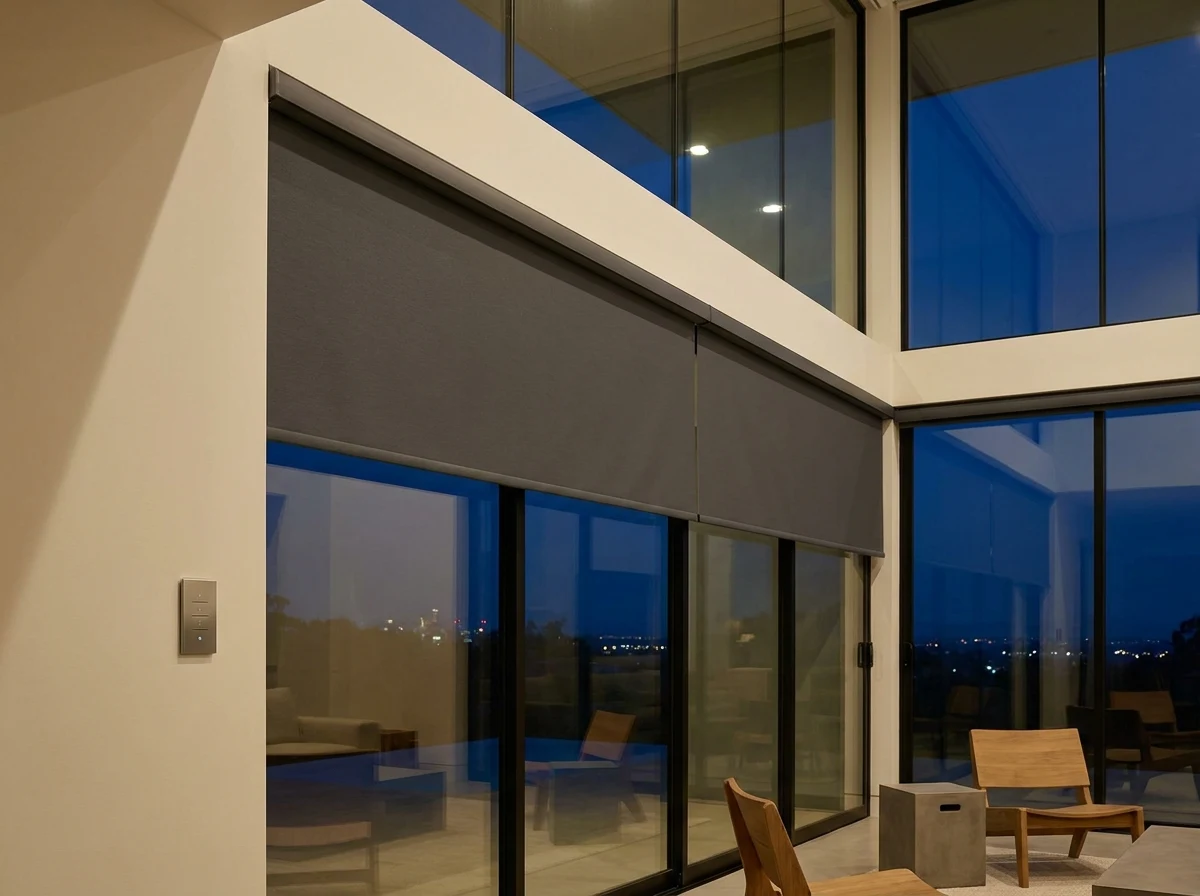
A tubular motor sits inside the blind roll and takes control by remote, wall switch, phone app, schedule or sensor. On a normal window it’s a comfort upgrade. On Baronetcy’s stairwell voids, double-volume walls and concealed ceiling-recess systems, it’s the only practical option — a chain or wand was never designed to reach three or four metres up a glass stairwell.
Two ways to power it
Rechargeable battery motors need no wiring and suit retrofits — charge every few months via a USB-style charger. Wired 220V motors suit new builds and major renovations: permanent, no charging, and the better choice for big or heavy systems and every exterior product. Either way, control layers stack: a handset for one blind, an app for the whole house, schedules that drop west blinds at 3pm in summer, and sun or wind sensors that react automatically — the wind sensor being safety-critical on any exterior product.
- Battery motors for retrofit; wired 220V for new builds and exterior products
- App control, schedules and sun/wind sensors, stacked or used alone
- Essentially required for concealed recess systems and external venetians
- No dangling chains — the most child-safe operation there is
Honest limitation
Battery motors need a periodic charge — usually every few months, depending on how often the blind runs — and quality motors are quiet, not silent. We set that expectation at the measure, not after installation.
Why it matters more here
Baronetcy already runs 24-hour manned security and controlled estate access, so the safety conversation indoors is a simpler one: no dangling cords or chains within a child’s reach, and every hard-to-reach opening controlled from a single app or wall switch instead of an unused wand gathering dust three metres up a stairwell.